You complete an evidence-based practice project in your area of interest, not a research dissertation, and use it to improve care.

Nursing Practice
Doctor's Degree
Lead at the Highest Level of Nursing Practice
The terminal degree for nurses ready to change how care is delivered.
The Goshen College-EMU Doctor of Nursing Practice (DNP) is a post-master’s practice doctorate offered in partnership between Goshen College and Eastern Mennonite University. It is a primarily online, asynchronous program of 33 credit hours across 10 courses, completed in 9 semesters or an accelerated 6-semester, 22-month option, and it culminates in an evidence-based practice project rather than a dissertation.
It’s built for working nurses: coursework is primarily asynchronous, with some videoconference sessions and a required residency held within a few weeks of the start. You complete 1,000 faculty-supervised practicum hours and enroll at either Goshen or EMU, with your diploma reflecting that choice.

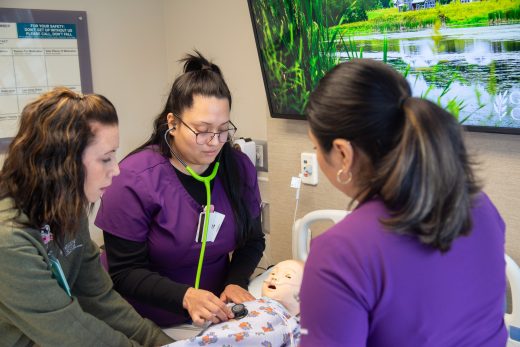
Built for Working Nurse Leaders
The DNP is designed for the master’s-prepared registered nurse ready to lead. It’s the terminal practice degree, and it’s what certified registered nurse anesthetists and many nurse leaders now pursue. You’ll qualify with an MSN, or a qualifying master’s in a business or health-related field, an unencumbered RN license, and current work in healthcare.
Because it’s a consortium, you enroll at either Goshen College or Eastern Mennonite University, take courses from faculty at both, and receive your degree from the institution where you enrolled. Rooted in the Anabaptist-Mennonite tradition of service, peacemaking, and stewardship, the program prepares you to lead within a dynamic healthcare system.
What Makes the Program Distinct
Placeholder for quote
Graduate Name
graduate position/title
Cost and Financial Support
Tuition is $880 per credit hour for 2025-26, across the 33-credit-hour, 10-course program. Because you enroll at either Goshen College or Eastern Mennonite University, your billing follows the institution you choose.
Students are billed by semester and can plan their investment with a financial aid counselor. See the financial aid page and explore scholarships to understand your options for graduate study.

How to Apply
To apply, you’ll need a Master of Science in Nursing from a CCNE- or NLNAC-accredited program (or a qualifying master’s in a business or health-related field) with a cumulative GPA of 3.3 or higher, and a current, unencumbered RN license in a state that is part of the SARA compact. You’ll also provide transcripts, a resume or CV, and documentation of your supervised practice hours.
The program requires a completed reference form (not required for Goshen College graduates) and an interview with the program co-directors by video conference. If your master’s degree is not in nursing, the co-directors review your background for the MSN Essentials and the program may run longer.
Not sure whether you qualify? Request information and we’ll walk you through it.
Common Questions About the DNP
Nurses who have earned a Master of Science in Nursing from a CCNE- or NLNAC-accredited school with a cumulative GPA of 3.3 or higher are eligible. A qualifying master’s in a business or health-related field (such as MPH, MBA, or MHA) may also qualify, provided the applicant meets the MSN Essentials and works in healthcare.
Goshen College and Eastern Mennonite University are partners in offering the DNP. You enroll at either Goshen or EMU, take courses from faculty at both institutions, and your degree is granted by the institution where you enrolled. It’s one program, taught across two Mennonite-affiliated nursing faculties.
The DNP is primarily asynchronous and online, so you work largely in your own timeframe, with some scheduled videoconference sessions for direct interaction with classmates and faculty. A required residency is held within a few weeks of the start of the program, and you complete 1,000 faculty-supervised practicum hours.
Instead of a research dissertation, DNP students complete an evidence-based practice project. You examine an evidence-based question in your own area of interest, focused on the care of individuals, groups, systems, or organizations, and use what you find to improve the safety, effectiveness, and efficiency of patient care.
Tuition is $880 per credit hour for 2025-26 across the 33-credit program. You complete 1,000 faculty-supervised practicum hours in total: 600 as part of your coursework, with up to 400 hours from post-baccalaureate study eligible to count toward the requirement. See program materials for details.
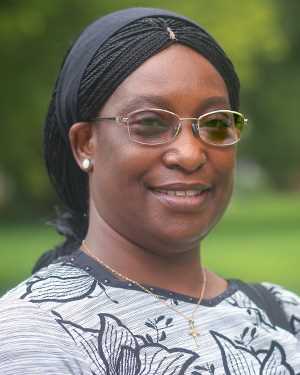
Sister Veronica Adeduro
Associate Professor of Nursing
Hilary Arroyo
Assistant Professor of Nursing
Amanda Borden
Assisant Professor of Public Health
Deena Brissett
Assistant Professor of Nursing
Cheryl Caffee
Associate Professor of Nursing
Brianna Conery
Assistant Professor of Nursing
Beth Miller
Professor of Nursing
Katie Schramm
Assistant Professor of Nursing
Susan Setiawan
Professor of Nursing
Jennifer Van Fleet
Assistant Professor of Nursing
Jewel Yoder
Professor of Nursing
Department Chair