Build inclusive classrooms and learn how schools can meet the needs of every student.

Disability Studies
Minor

Make Your Field More Inclusive
This minor teaches you to engage with people with disabilities with a commitment to access and care.
The Disability Studies minor at Goshen College examines how disability is shaped by cultural, political, social, and historical forces, and builds the advocacy and accessibility skills to make communities more inclusive. It’s open to students in any major, and you declare it with your academic advisor.
It pairs naturally with education, social work, psychology, and public policy. Whatever you major in, you’ll leave understanding the lived experiences of people with disabilities and how to help institutions respond to difference with equity, not just good intentions.

Pairings that Work Well with the Disability Studies Minor
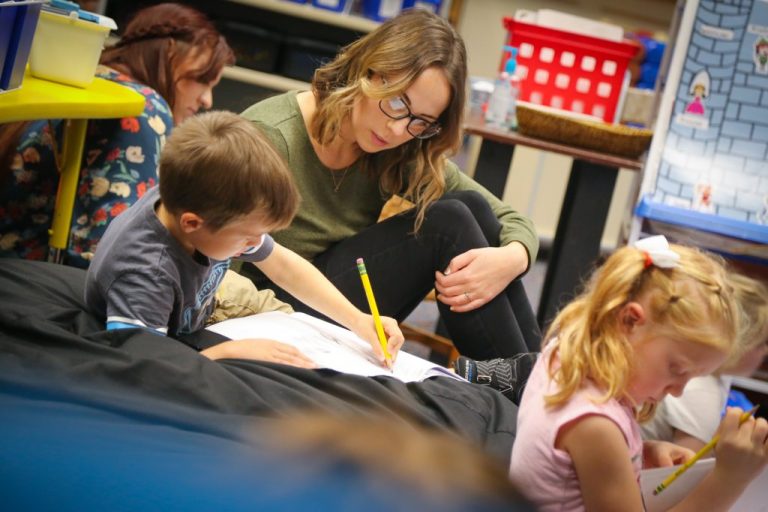
Pair With Education

Pair With Social Work
Serve people with disabilities and their families with a deeper grounding in advocacy and access.

Pair With Psychology
Understand how society shapes experiences of ability, and prepare for graduate study in the field.

Learn by Doing it
The work happens in real communities, not just the classroom.
Your coursework is enriched by hands-on experience. Several of your classes will give you the experience of working in school settings supporting students with disabilities, and some of your elective classes can give you hands-on experiences in other contexts. It’s the kind of real responsibility that builds an advocate, and it’s how you find out what part of this work is yours.
The minor is a mix of required courses and electives that allows you to tailor this to your interests and career path. View the complete program requirements in our catalog.
Paying for Goshen
Scholarships make up a large portion of Goshen financial aid packages, which average almost $26,000 per student, not counting work-study or loans. To see your own price after aid, run the net price calculator and talk with a real person in the financial aid office. International students can ask the financial aid office directly about the aid available to them.
Common Questions About the Goshen Disability Studies Minor
It complements almost any field, and especially education, social work, psychology, communication, and public policy. Whatever you major in, the minor deepens your understanding of inclusion, accessibility, and equity, and gives you advocacy skills that strengthen the work you already want to do.
Graduates work in disability advocacy organizations, K-12 education, civil-rights policy in local government, independent living centers, and higher-education disability resource offices, in roles like inclusive educator, accessibility consultant, and mental-health advocate. Many continue to graduate study in psychology, public policy, speech and hearing sciences, education, or social work.
You’ll study the social, cultural, and historical contexts of disability, learn to advocate for the disability community, and examine the inequities and injustices that affect people with disabilities. The goal is real skill in building access and equity, not just awareness, so you can help drive meaningful change.
Yes. Scholarships make up a large part of Goshen financial-aid packages, which average almost $26,000 per student, not counting work-study or loans. Visit the financial aid page for available scholarships and to talk with a counselor about your situation.
Ready to get started?
Diana Boussom
Assistant Professor of American Sign Language
Colleen Geier
Professor of ASL Interpreting